

Practical guidance, warning signs, and vetted resources to help parents, schools, and communities prevent and respond to child sexual abuse.
The Safe Toolkit
Toolkit for Parents & Caregivers
✶
Toolkit for Parents & Caregivers ✶
Toolkit Home
Toolkit for Parents & Caregivers
The Problem of Child Sexual Abuse
→ Preventing Child Sexual Abuse
Why Prevention Matters
Curriculum Approval & Delivery
Supporting Prevention Education in Your School
Prevention Education for Parents
Our Responsibility to Protect Children
Toolkit for Educators & School Leaders
The Problem of Child Sexual Abuse
Preventing Child Sexual Abuse
Why Prevention Matters
Nationally, 1 in 10 children will experience sexual abuse before age 18. In Utah, that number is 1 in 7. Children ages 7 to 13 are most vulnerable, and in 91% of cases the person responsible is someone the child already knows. Prevention education gives children the safety vocabulary and skills to recognize unsafe situations, set boundaries, and tell a trusted adult before or when something goes wrong. Research shows children who receive this education are more likely to seek help when they need it. Children who receive prevention education are also more likely to disclose abuse early, which significantly reduces long-term harm.
We teach children to wear a helmet, buckle their seatbelt, and look both ways before crossing the street. We do not wait until something bad happens to give them those tools. CSA prevention education works the same way. Teaching children about body safety, trusted adults, and what to do if something feels wrong gives them protective skills before they need them. The earlier and more consistently children hear these messages, the more likely they are to use them.
Children ages 7 to 13 are most vulnerable to sexual abuse and in 91% of cases the person responsible is someone the child already knows.
What child abuse prevention education is…and is not
This is safety education, not sex education. There is no discussion of sexual acts, orientations, or reproduction. Utah law explicitly prohibits instructors from asking students to share personal experiences of abuse. Lessons are age-appropriate, focused entirely on personal safety, and designed to build confidence rather than fear.
CSA Prevention education teaches students how to:
Recognize safe and unsafe situations
Understand personal boundaries
Identify trusted adults they can turn to
Seek help when something feels wrong
Stay safe online
Curriculum Approval & Delivery
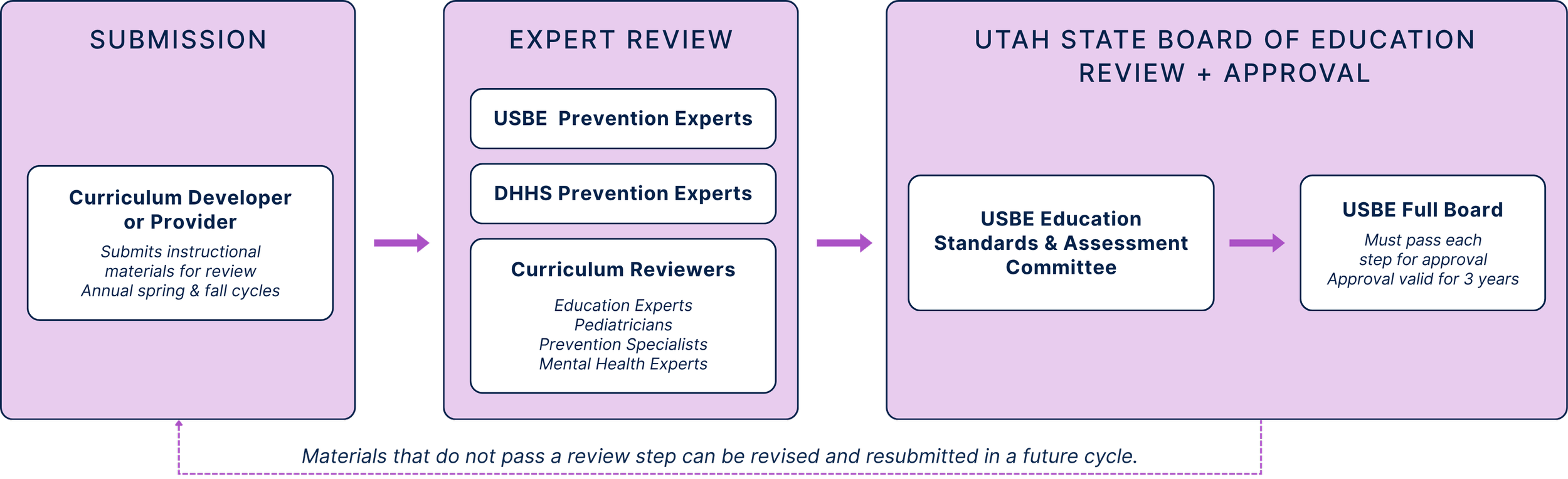
Every Child Sexual Abuse and Human Trafficking curriculum used in Utah schools must be reviewed and approved by the Utah State Board of Education (USBE) in partnership with the Utah Department of Health and Human Services (DHHS) and community experts. Reviewers include USBE prevention staff, health and mental health professionals, educators, pediatricians, and health prevention experts.
Materials are approved for 3 years and must be resubmitted for renewal after that period or if any updates are made. This vetting process ensures all instruction is age-appropriate and evidence-based before it ever enters a classroom. All materials must be taught to fidelity, so no content changes can be made during delivery.
Prevention Curriculum Approval Process
Delivery Structure
Lessons can be taught by trained school counselors, teachers, nurses, or prevention specialists from approved organizations. Most programs involve one to two lessons per year, typically 30 to 60 minutes each. Schools schedule instruction based on their own needs and calendar.
Parents’ Rights
Schools are required to notify parents before instruction begins. Parents may review all instructional materials in advance and may choose to attend the lessons in person. Parents may opt their child out if they choose. Contact your school counselor or principal for more information about the materials your school uses.
Supporting Prevention Education in Your School
Student prevention education is encouraged by Utah law but not yet required for schools. The state of Utah has allocated $1.5 million in ongoing funding to provide programming at no cost to schools. Many schools simply do not know these resources exist or have not yet prioritized them.
If your school is not yet offering prevention education, here’s what you can do:
Talk to your school counselor or principal and let them know you support prevention education for students
Ask whether your school has connected with a prevention provider or considered training a school or district staff member (counselor, social worker, teacher, nurse)
Attend a school community council or school board meeting and raise the topic
Share that funding is available so cost is not a barrier
For more details about school-based prevention, visit the School-Based Prevention Education section of the toolkit.
To learn more about advocating for prevention education in your school, review the Parent Advocacy Tools.
Important Information
Frequently Asked Questions for Parents about CSA Prevention (The Policy Project)
USBE-Approved Providers and Instructional Materials (Utah State Board of Education)
Child Sexual Abuse and Human Trafficking Prevention Overview (Utah State Board of Education)
Prevention (US Department of Justice)
Child Sexual Abuse Prevention Education (The Policy Project)
The Importance of Preventing Child Sexual Abuse (Darkness to Light)
School-Based Prevention Education for Parents (Safe Toolkit)
School-Based Staff Training Resources (Safe Toolkit)
School-Based Prevention Education for Students (Safe Toolkit)
Research shows children who receive CSA prevention education are more likely to seek help when they need it and to disclose abuse early, which significantly reduces long-term harm.
Prevention Education for Parents
Most children who experience abuse never tell an adult. Not because they do not want help, but because they do not know how to ask for it, or because they fear what might happen if they do. Prevention education at school helps children develop the vocabulary and confidence to speak up. And parents play a critical role — children who know a trusted adult at home will believe them and support them are more likely to come forward.
For more parent resources such as signs of abuse, tips on talking to your child about abuse, key safety concepts every parent should teach at home, and more, see our resources on Protecting Your Child.
What Utah Schools are Required to Provide
Utah law (53G-9-207) requires every public school district and charter school to offer parents of elementary students education on CSA and human trafficking prevention at least once every three years.
Required parent education must cover:
How to recognize warning signs of a child who is experiencing abuse or exploitation
Age-appropriate ways to talk with your child about body safety and abuse prevention
Resources available for victims of sexual extortion
This is not optional, it is a legal requirement. If your school has not offered this education recently, you can ask your school counselor or principal about when and how it will be provided.
Schools are also required to provide prevention training to all adults working with youth at least once every three years on how to recognize, respond to, and report suspected child sexual abuse and human trafficking.
Resources Available Through Your Elementary School
Utah elementary schools have access to USBE-approved educational materials for parents as part of their mandate to offer this training every three years. These can include self-paced digital modules, presentations, and interactive toolkits developed by professional prevention organizations. Reach out to your school counselor or principal to find out what is available in your school.
You can also review the USBE-Approved Providers List to see which organizations have state-approved materials for parents in your area. All materials on this list have been reviewed to ensure they are age-appropriate and aligned with state standards.
Important Information
Minimum Standards for CSA and HT Prevention for Parents/Guardians (Utah State Board of Education)
School-Based Prevention Education for Parents (Safe Toolkit)
Our Responsibility to Protect Children
In Utah, all adults are mandatory reporters of child abuse. If you see signs that a child may be experiencing abuse or exploitation, you are legally required to report it. Contact the DCFS Child Abuse Hotline at 1-855-323-3237 (available 24 hours a day, 7 days a week) or call 911 in an emergency. You do not need to have proof or be certain of abuse.
Note: Utah law provides a limited exemption for clergy who receive disclosures in specific confidential religious settings. All other adults — including teachers, coaches, neighbors, and family members — are required to report.
Important Information
Child Protective Services Reporting Information (DHHS Child & Family Services)
Utah Child Abuse and Neglect Reporting Requirements Law (Utah State Legislature)
Child Sexual Abuse and Human Trafficking (HT) Prevention (Utah State Board of Education)
USBE-Approved Providers List (Utah State Board of Education)
Prevention (US Department of Justice)
Community Education Classes (Saprea)
The Importance of Preventing Child Sexual Abuse (Darkness to Light)
Child Sexual Abuse Prevention Toolkit for Parents (Lauren’s Kids)